A clamp or two will hold your work steady and your result will be much more precise.
Coping saw for vinyl trim.
The extra deep 6 in.
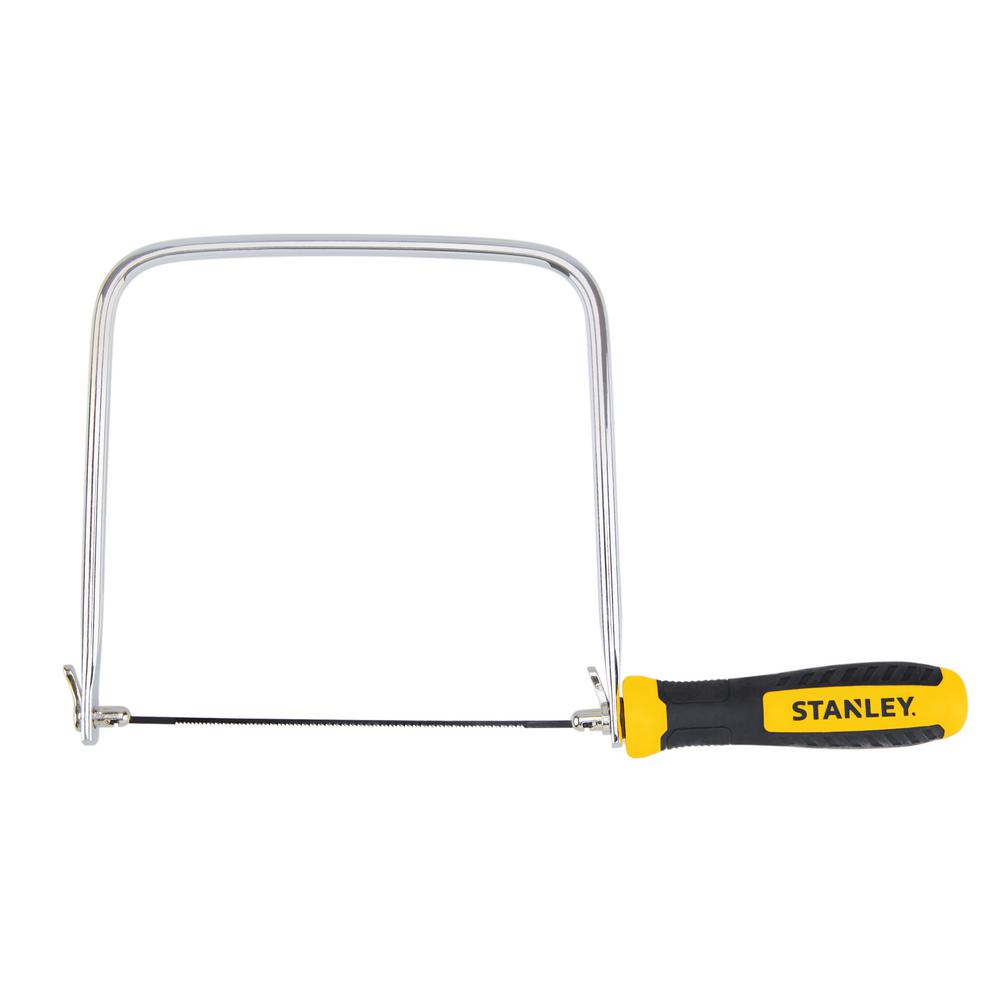
This tool uses a thin blade that s attached to a u shaped frame from both sides through a clip at each end.
Pros and cons of coped corners trim carpenters and other professionals often prefer coped joints because they tend to open up less than miters when the wood shrinks during dry weather.
Then use a pencil to outline the edge of the molding profile.
The blade can be removed at will as there are different ones based on what material you want to cut.
In practice most of us encounter coping in cutting trim work especially cornice and.
Perfect for cutting wood trim and other ornate wood projects this deep cut coping saw is made from heavy duty steel and includes a rust resistant coating.
To make a cope joint butt the first piece of molding into the corner and fasten in place.
In this video i give you my thoughts and some tips on coping base and crown.
The technique gets the name from use of a coping saw to make the cut.
A coping saw is a simple tool that s not too fancy nor too expensive and that should be included in every woodworking set of tools.
The coping saw coping is a process by which one piece with an irregular surface is fitted to another.
Most molding cuts are done at a 45 degree angle using a miter saw.
Coping thin floppy trim is like doing dental work on a snake.
What is the best tool and method for coping baseboard and crown.
If you re using your grandpa s coping saw well actually any coping saw do three things.
However a coped cut is commonly used on the inside corners joining interior walls.
The usual way to get tight inside corners on trim is to cope them to cut a profile on one part that will fit over the adjoining part.
The profile is cut with a coping saw or sometimes a jigsaw.
Replace the coping saw blade if it s rusted or worn.
Clearance is designed for angled and curved cuts in hard to reach areas.
That means lots of slow fussy work with a coping saw.